
- You’ve just completed your last exam for the year – it is officially Christmas break. You and all your friends head over to get a celebratory pastry and hot chocolate.
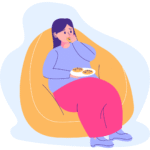
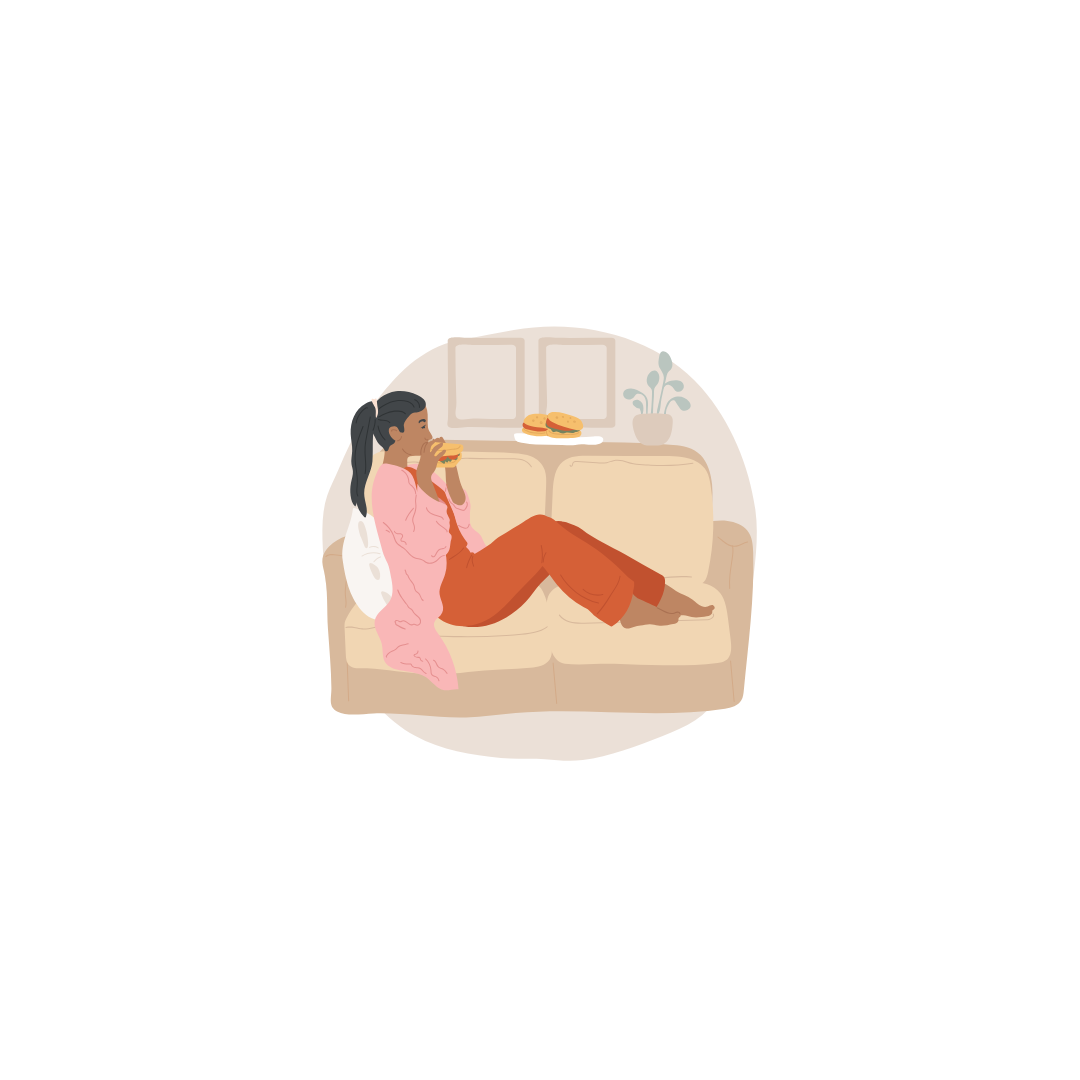
- You’re sitting on your couch, cuddled up with blankets, watching the Notebook for the 75th time, as you shove handfuls of popcorn into your mouth while tears stream down your face.
- You’re approaching a deadline at work but instead of focusing on your task, you’re pacing up and down your kitchen, raiding your cupboard for snacks.
Do any of these scenarios feel familiar to you? Your response is likely ‘yes’ because food is a fundamental part of our lives. It nourishes our bodies, provides sustenance, and brings people together. It is the focal point of celebrations and social gatherings. Food can even act as a reward for one’s accomplishments or a means of relief in times of stress or sorrow – and that’s okay. Turning to food for comfort is a normal human instinct. After all, we soothe crying babies with milk!
In this blog post, we will delve into the concept of emotional eating, its underlying causes, its effects on our bodies, and other strategies to manage our emotions.