The term “orthorexia” was born in the 1990’s, and describes an obsession with “healthy” eating to the extent that an individual’s well-being is put at risk. This has since been considered a form of disordered eating. The etymology of the word “orthorexia” refers to Greek ortho or “right” or “correct”, and orexis or “appetite”, literally meaning “correct appetite”, but in practice meaning “correct diet”.

Signs of orthorexia include:
- Compulsive checking of ingredient lists and nutritional labels.
- An increase in concern about the « natural » ingredients.
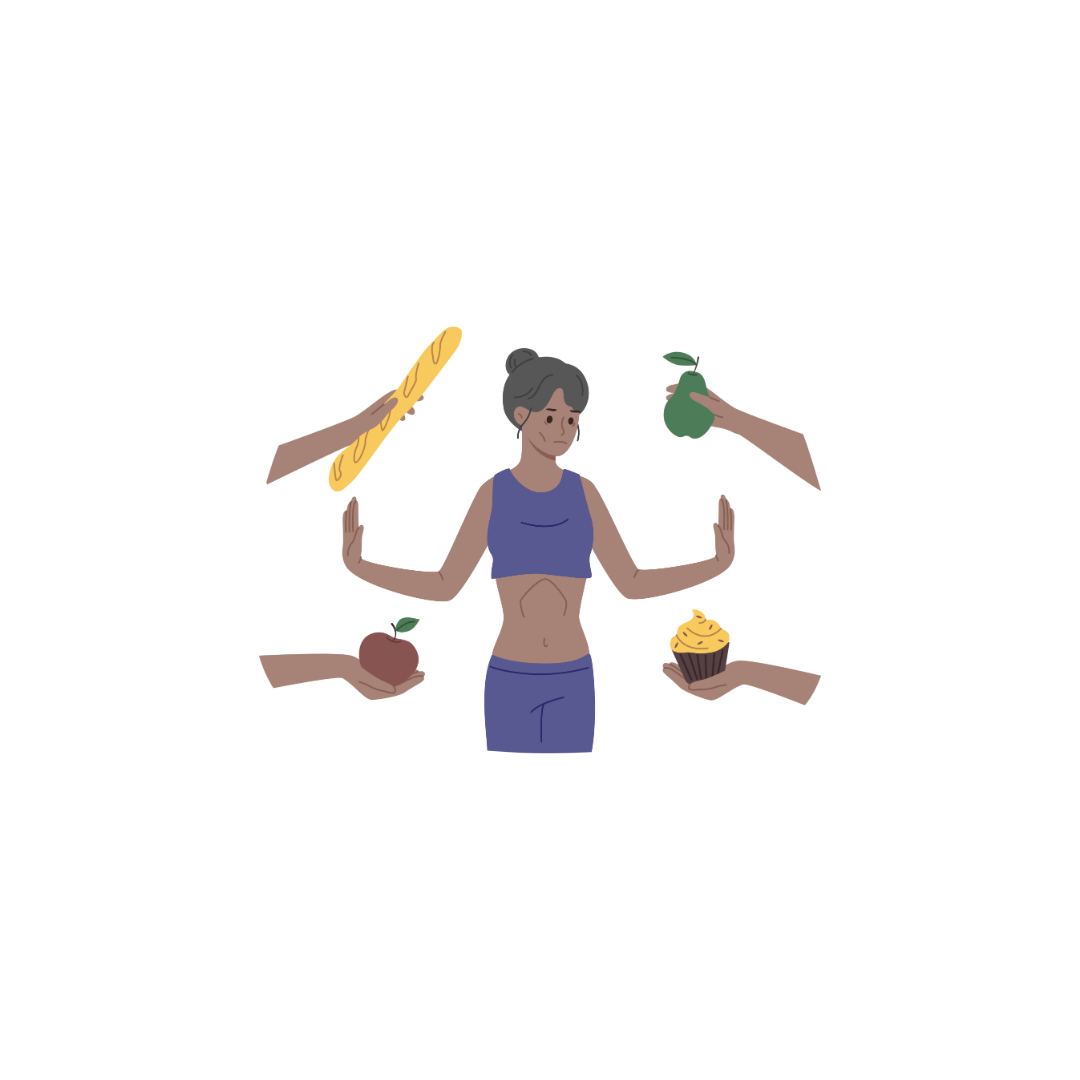
- Cutting out an increasing number of food groups (ex. all sugar, all carbs, all dairy, all meat, all animal products).
- An inability to eat anything but a narrow group of foods that are deemed “healthy” or “pure”
- Unusual interest in the healthiness of what others are eating.
- Spending hours per day thinking about what food might be served at upcoming events.
- Showing high levels of distress when “safe” or “‘healthy” foods aren’t available.
- Obsessive following of food and “healthy lifestyle” blogs on social media.
How does our culture affect orthorexia?
Can orthorexia be diagnosed?
Orthorexia nervosa is not formally recognized in the DSM , and it’s unclear whether it is a subset or presentation of other eating disorders, such as anorexia or ARFID, or it is a stand-alone disorder. Orthorexia cannot be officially diagnosed, but the symptoms mentioned above can be a guideline to help structure what treatment would look like.
How to overcome orthorexia?
Treating orthorexia can require a multidisciplinary approach with a doctor, dietitian and a psychologist. Since people with orthorexia are concerned with their health, it can be more accessible for them to seek treatment. Treatment for someone could look like the following:
- Noticing what food rules have developed, and which foods one has categorized into healthy vs unhealthy.
- Reflecting on the biases that one inherited from family, friends, culture or social media.
- Through work with a dietitian, moving towards food freedom by engaging in exposures that are “unhealthy” or “off-limits”, and noticing what thoughts, feelings or behaviors come up when confronted with these foods.
- Repairing one’s relationship with food by deconstructing myths and ideas fused with different types of food.
Seeking Help
While tackling orthorexia can seem daunting, working with specialized professionals in eating disorders, such as the dietitians at Sööma, can help accompany you towards a more flexible and free relationship with food!
If you or someone you know is struggling with orthorexia, please reach out to our team to see how we can help. You can contact us at 514-437-4260 or e-mail us at info@sooma.ca.
Click here to book an appointment directly with one of our team members!
Written by
Elsa Chu
Registered Dietitian
References
- https://www.nationaleatingdisorders.org/learn/by-eating-disorder/other/orthorexia
- https://psychcentral.com/eating-disorders/orthorexia#treatment